










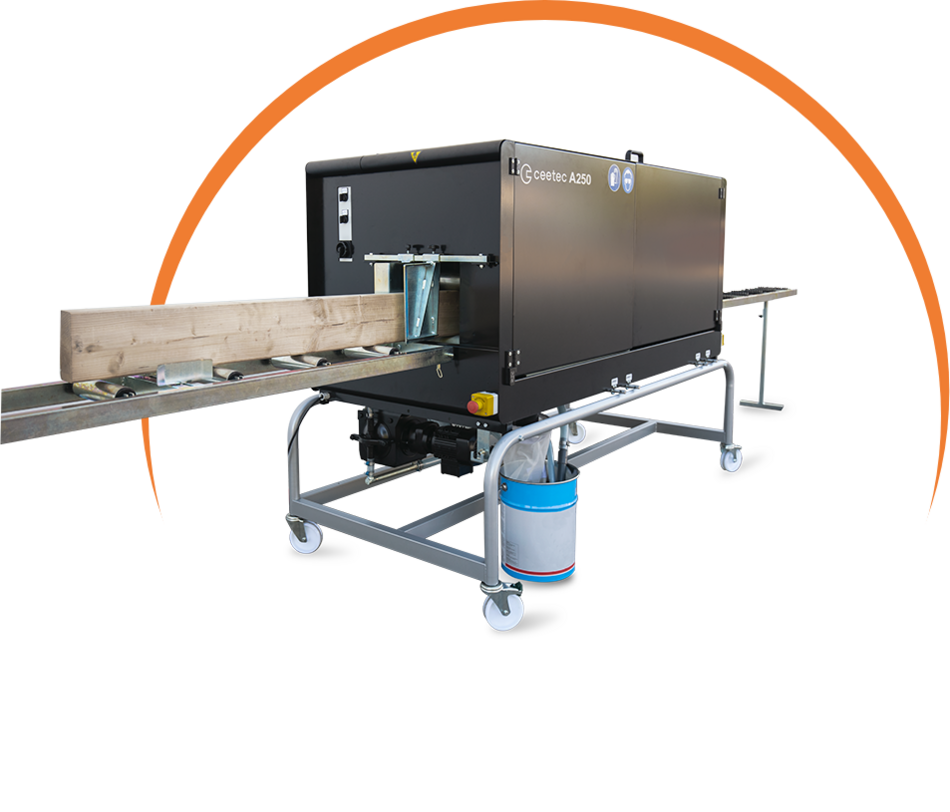

Frequently Asked Questions About the A250 / A380 Automatic Coating Machine
What is the difference between the A250 and A380 automatic coating machines?
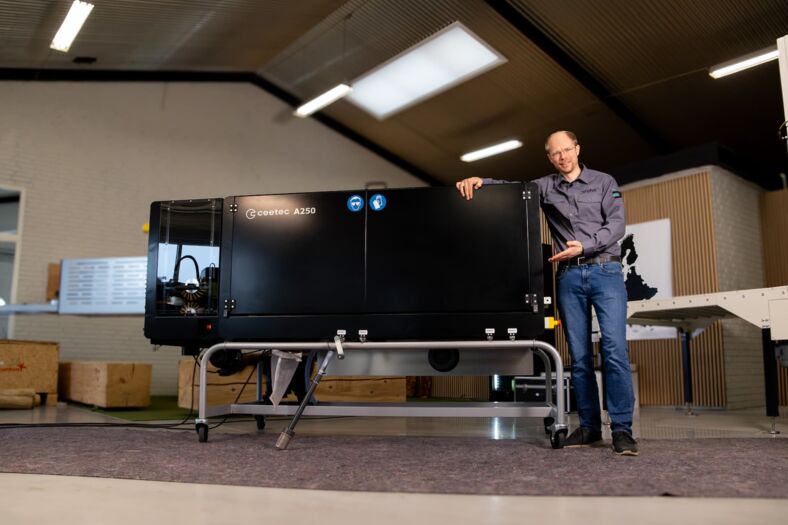
The A250 is designed for the standard boards, profiles, beams, and exterior lumber typically used in carpentry. The A380 offers a wider working width of 40 cm instead of 25 cm and is therefore the better choice when wider components (3-ply panels, glulam, etc.) need to be coated on a regular basis.
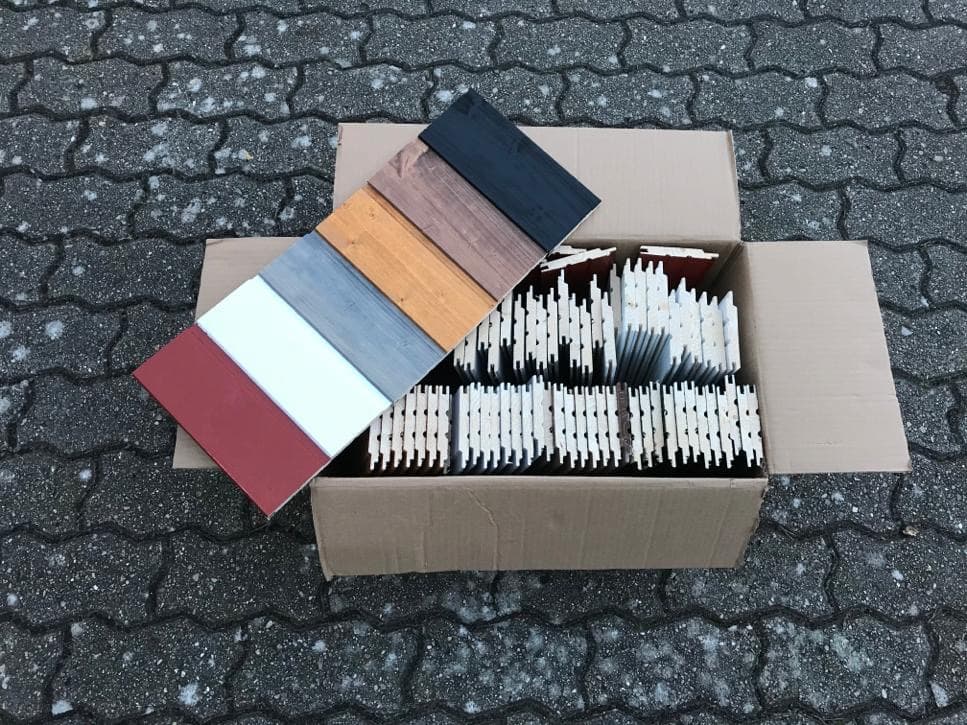
Can the A250 or A380 handle any color?
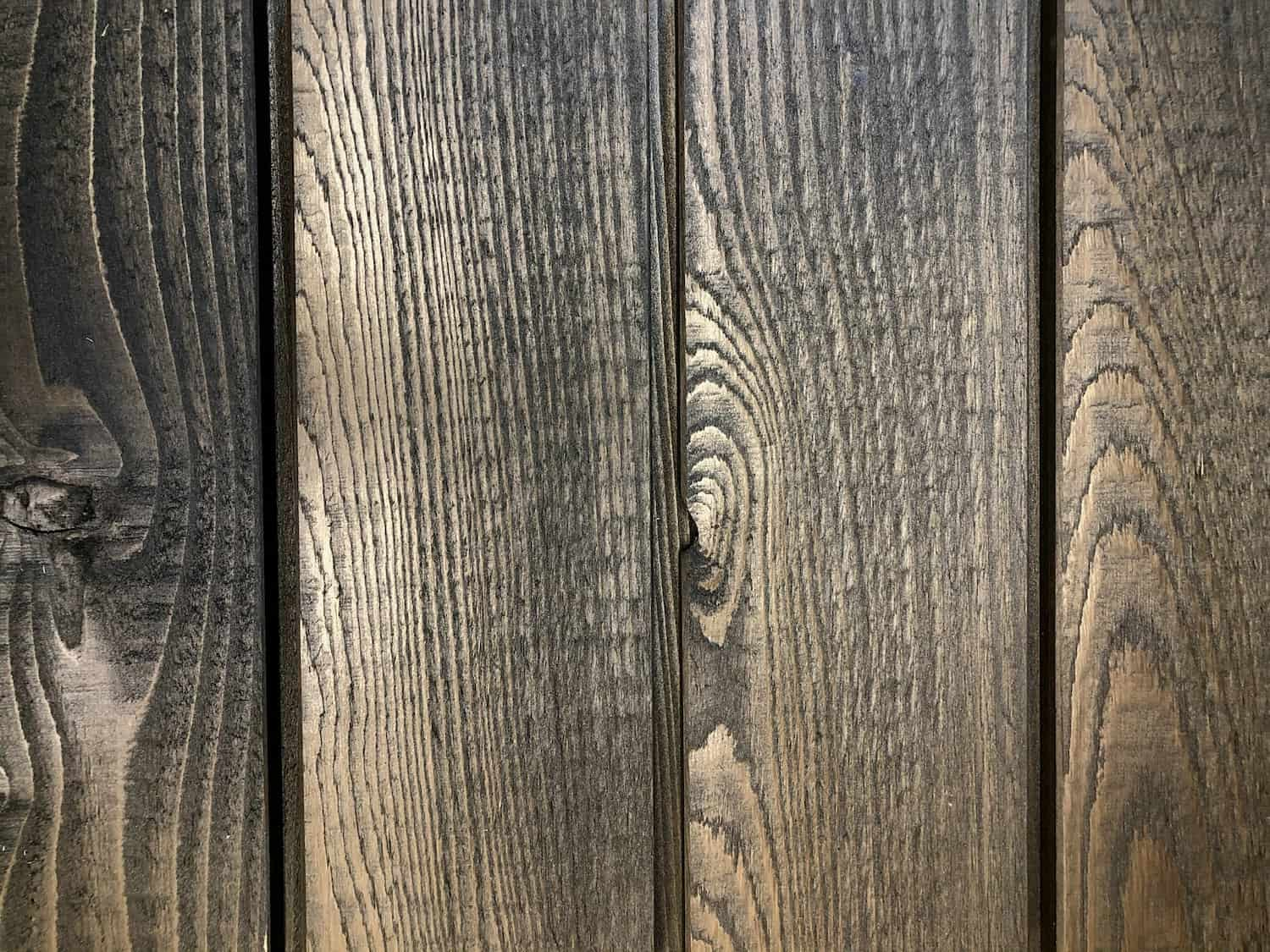
No, but the range is very broad. The machines can process many water-based glazes, opaque wood paints, wood preservatives, and suitable oils from manufacturers such as Remmers (HSL 36, T-660, Gartenholzöl, MSL 45, and many more) ADLER (Lignovit Glaze, Lignovit Platin, Lignovit Color, Lignovit UV 100, Lignovit GLT plus, 3-in-1, and many more), KEIM (Lignosil Verano, Lignosil Color, Lignosil Artis, and many more), Koch&Schulte (Hydrostop H2O, Lignopro 425, 841, Designer Finish PU, Wood Oil W, and many more), OSMO Inpex water-based paints and glazes, Saicos Weathering Glaze, BelAir Opaque Paint, PNZ, KORALAN (Special Wood Oil, Weathering Glaze, Opaque Paint ED 411, and many more), Teknos / Feyco Teknoshield, Teknocladd, Eterno Facade Gray, Pento Fluid Silverwood, Böhme SunCare, Bosshard Arbezol Aqualin Pro, Arbezol Industrial Finish, and many more. FaluVapen modern slurry paint, Renner Hydro oils and opaque paints, and many others.
It’s not just the manufacturer and product name that matter—visosity, open time, and the intended application rate are crucial. Some very thick hand-applied paints may not flow sufficiently. Solvent-based products with a low flash point may require additional explosion protection measures and must not be used without a technical assessment.
Want to know if your specific paint will work? Feel free to contact us, and we’ll check it for you. If you already have a machine, we’ll also provide you with a setup recommendation right away.
Does the machine coat the boards on all sides?
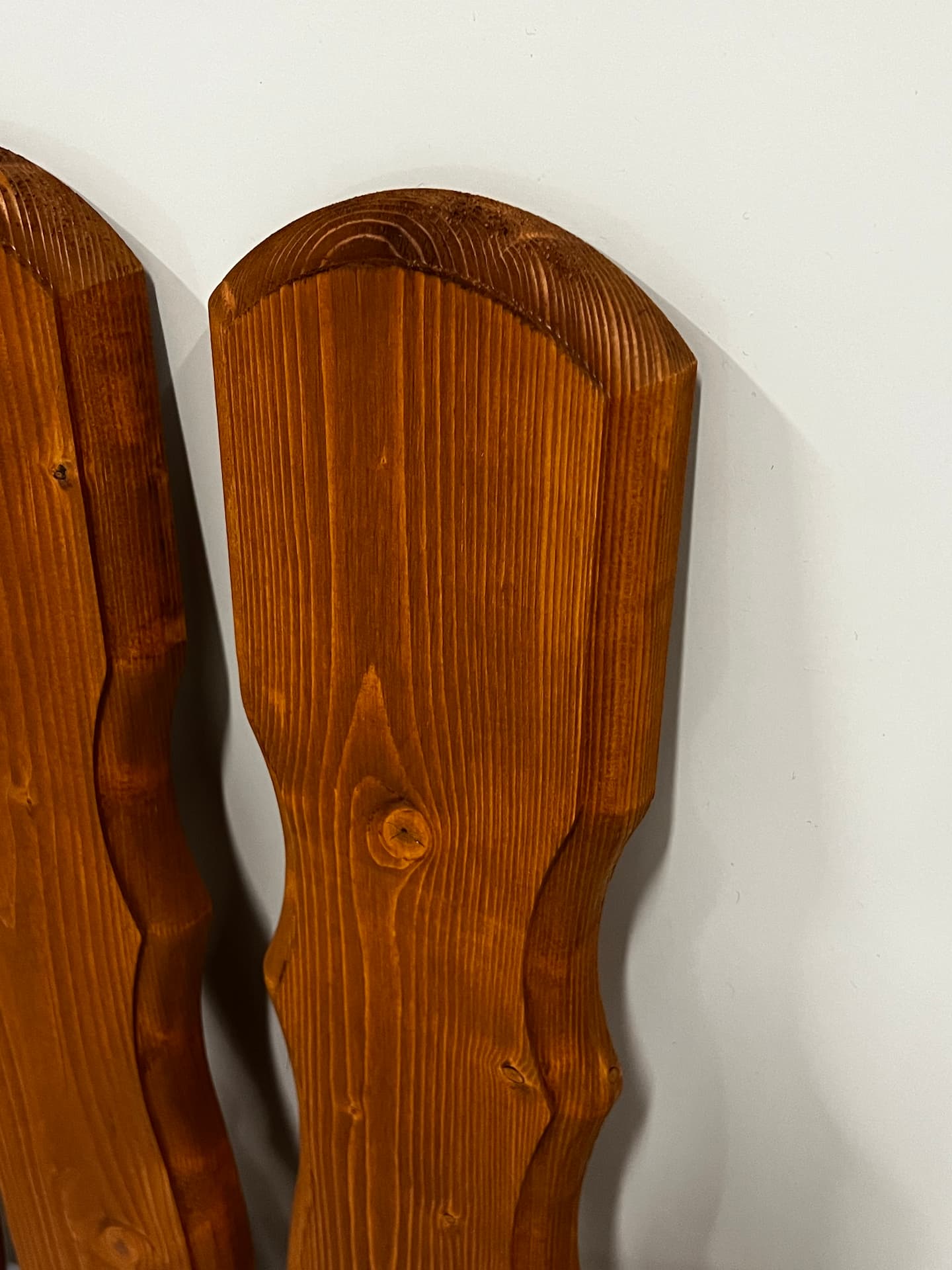
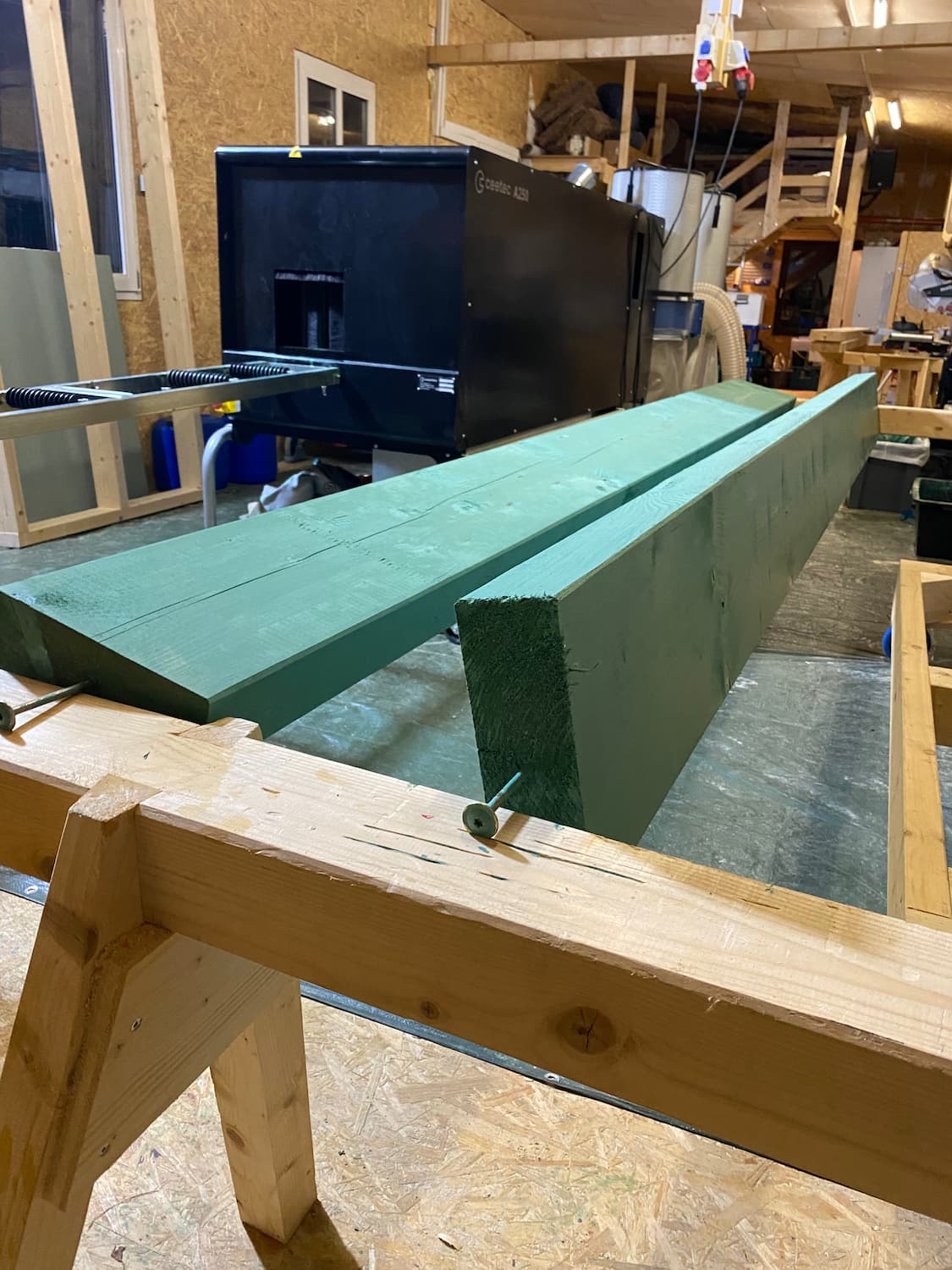
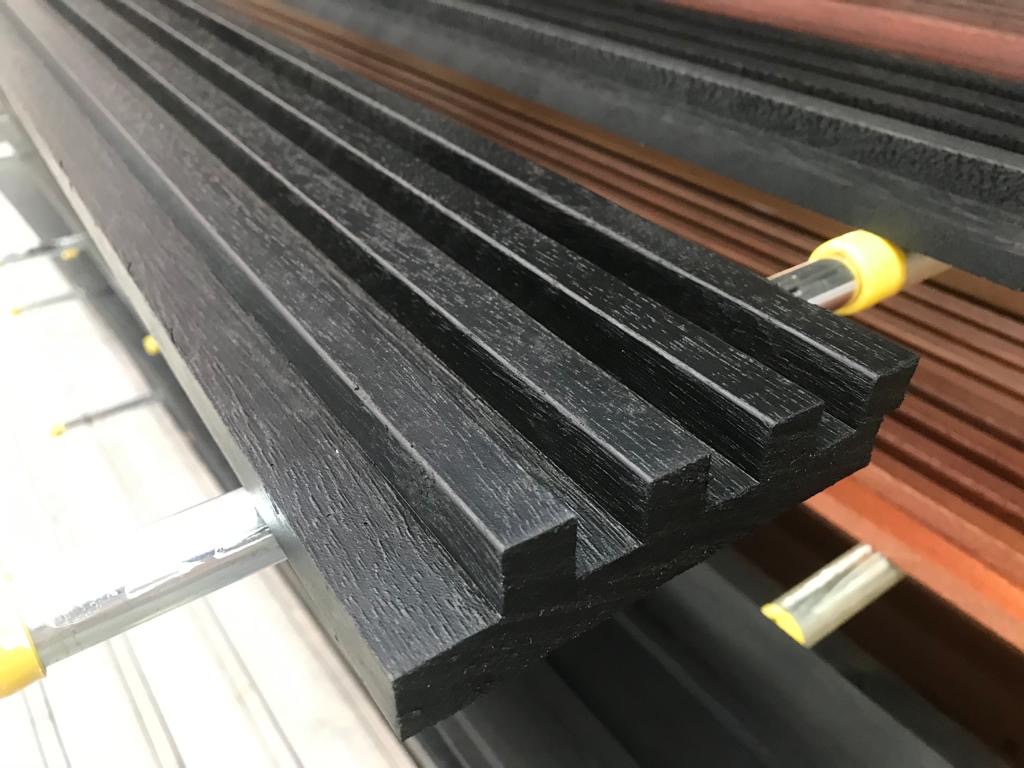
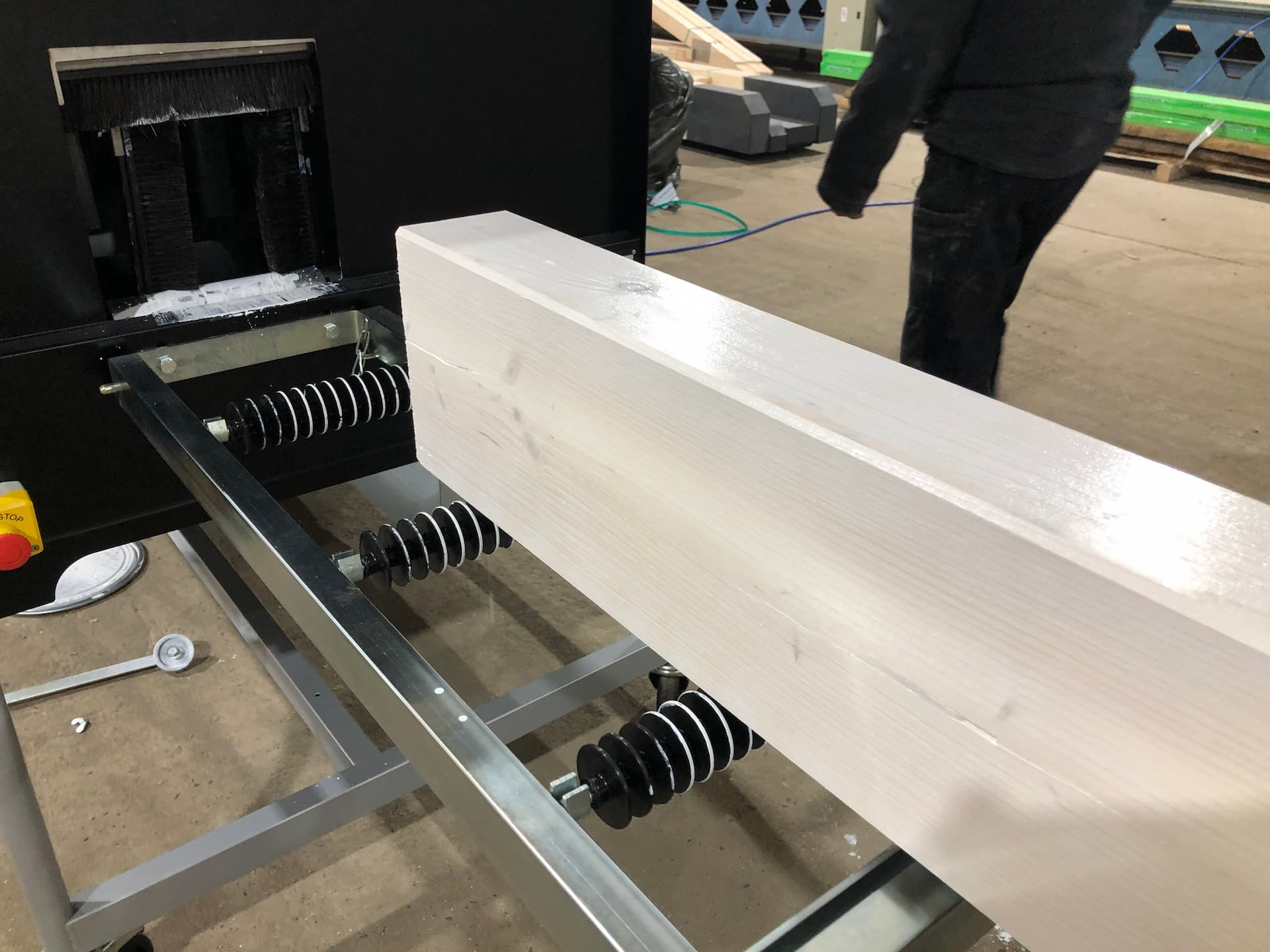
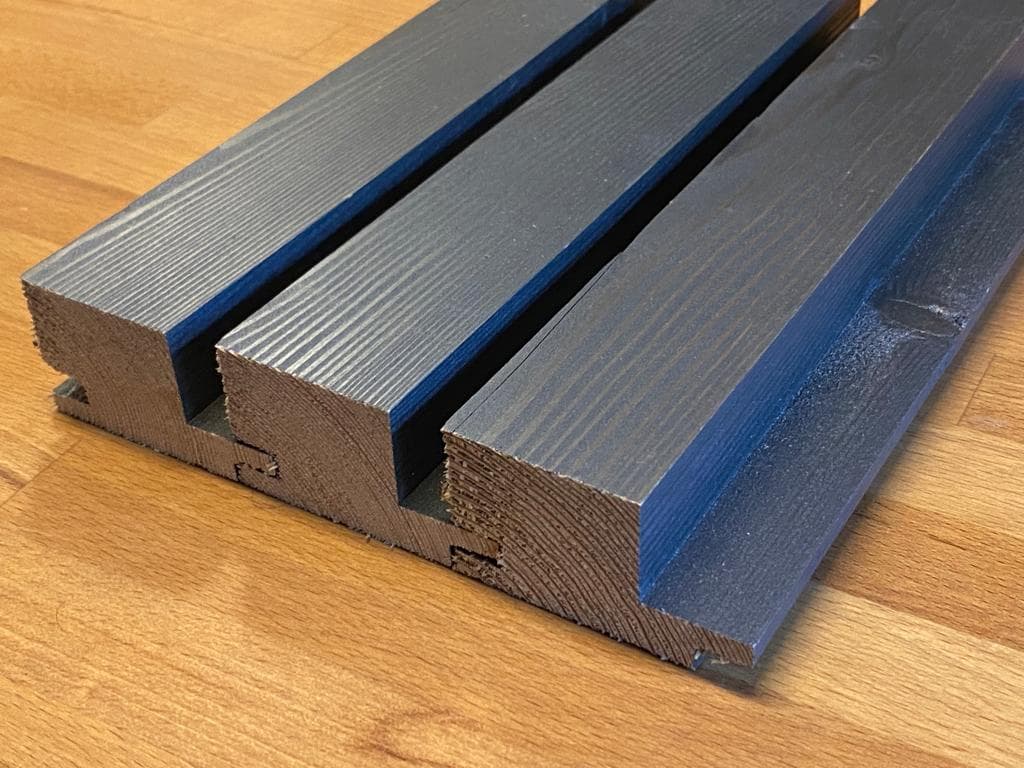
Yes, if you'd like; otherwise, on three sides. The A250 and A380 can coat boards and profiles on all sides in a single pass. The paint is first applied in excess. Then, individually adjustable rotating brushes distribute and dispense the material evenly across the surfaces and into the profiles. End grain surfaces, drill holes, cut edges, and areas to be machined later must be treated manually as well, depending on the wood preservative system.
Do the boards come out of the coating machine dry on the back side?
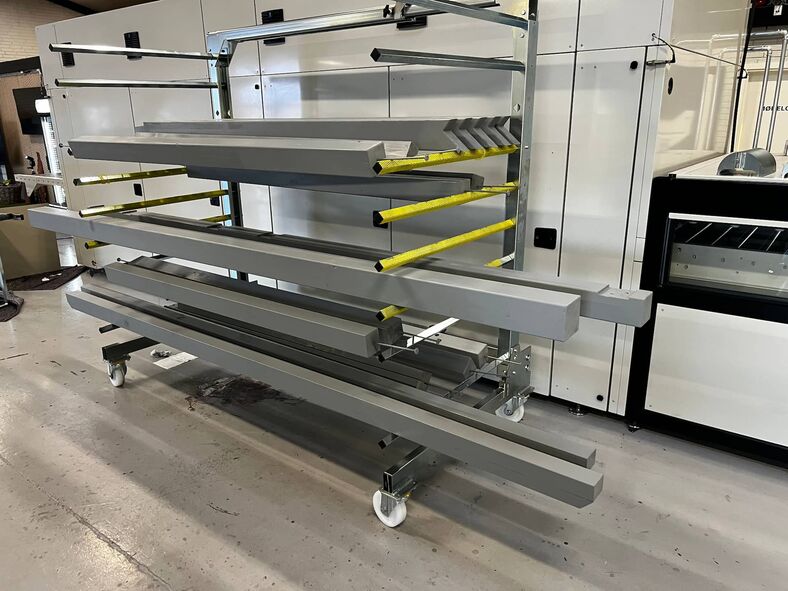
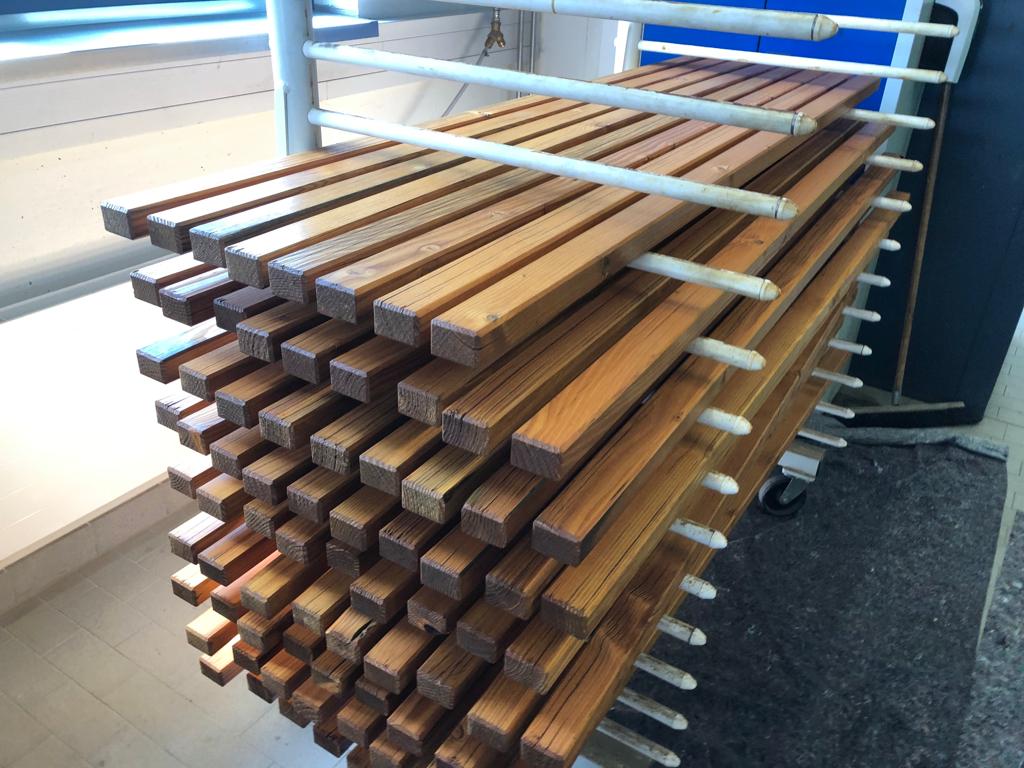
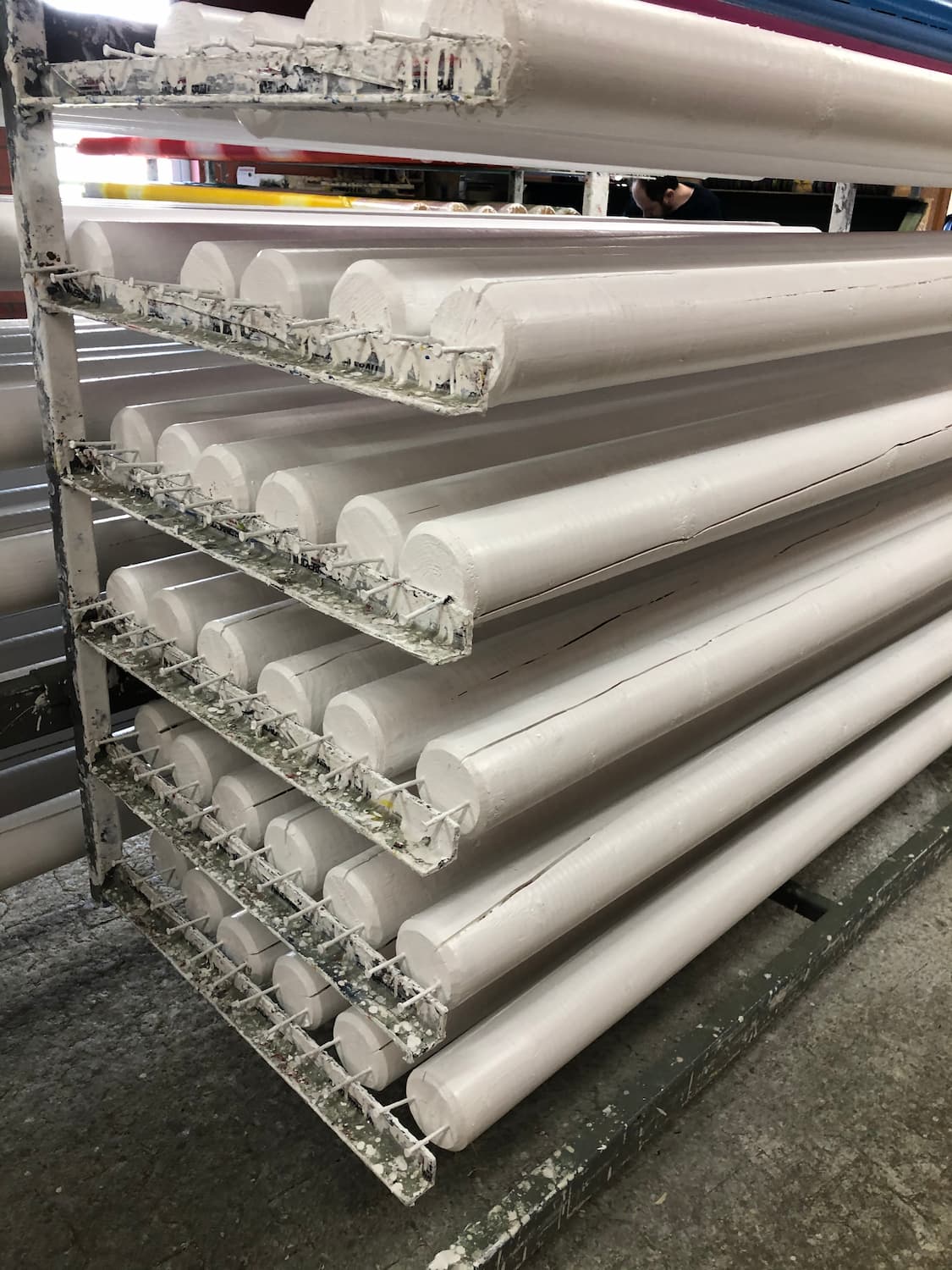
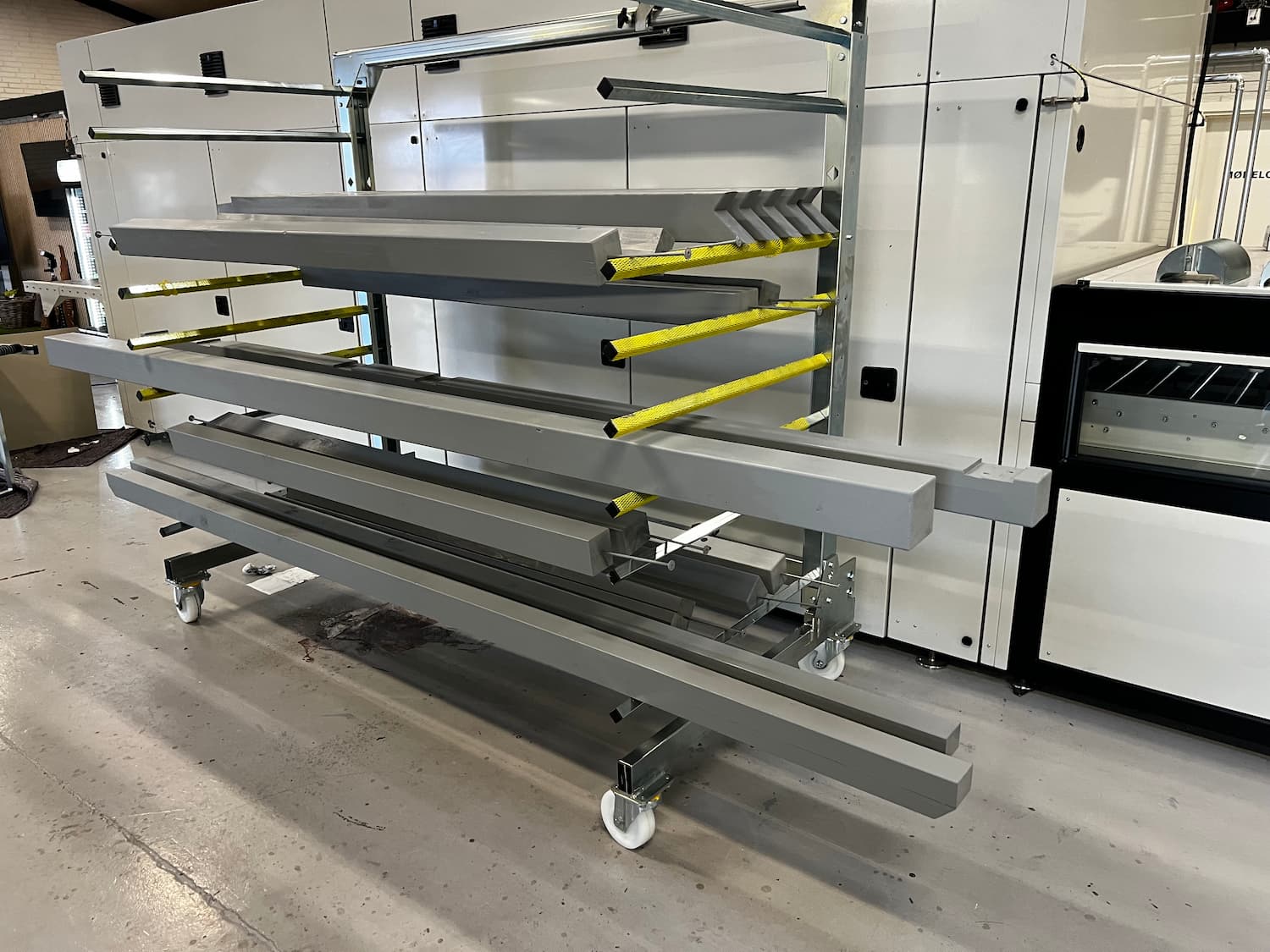
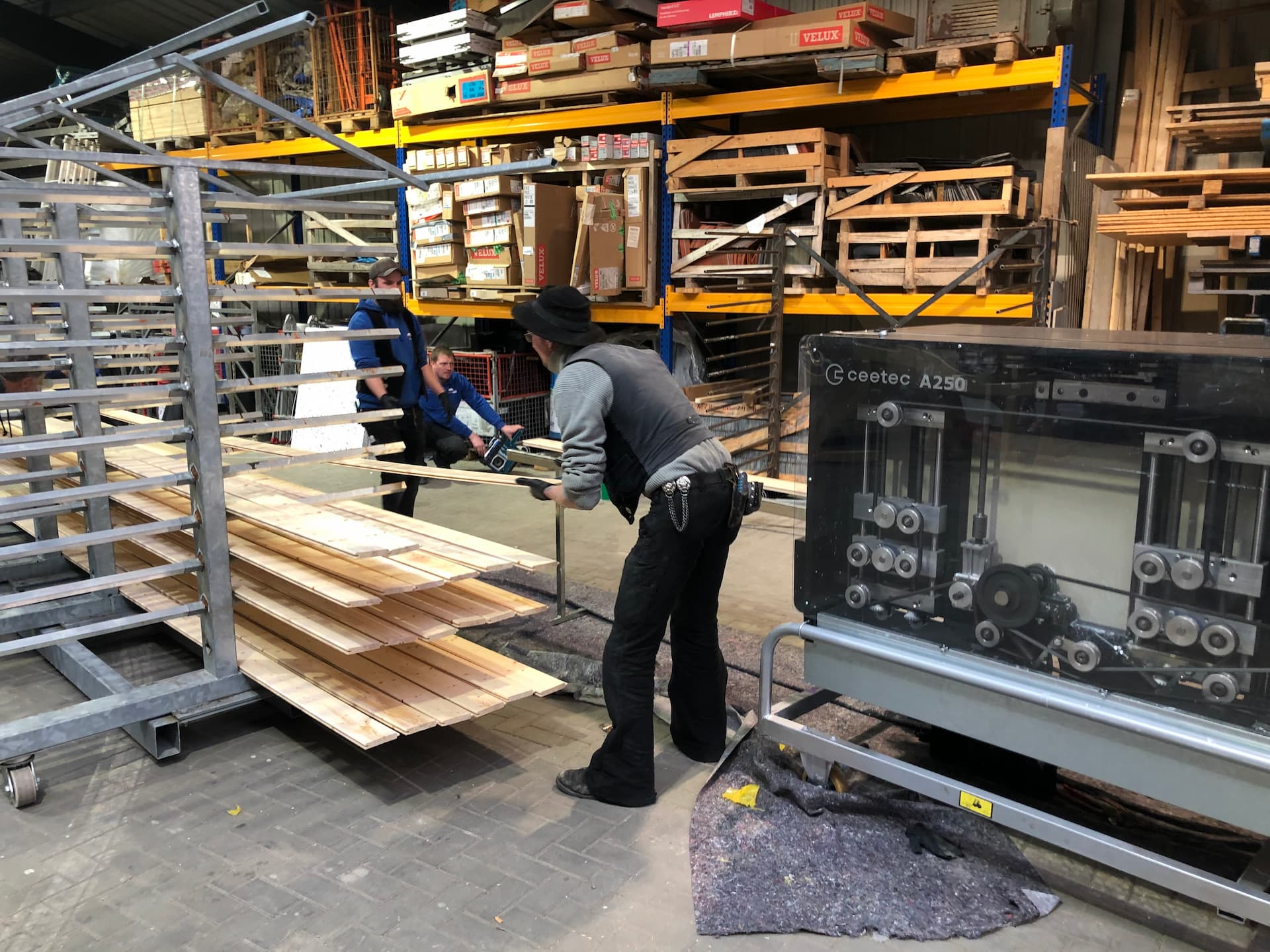
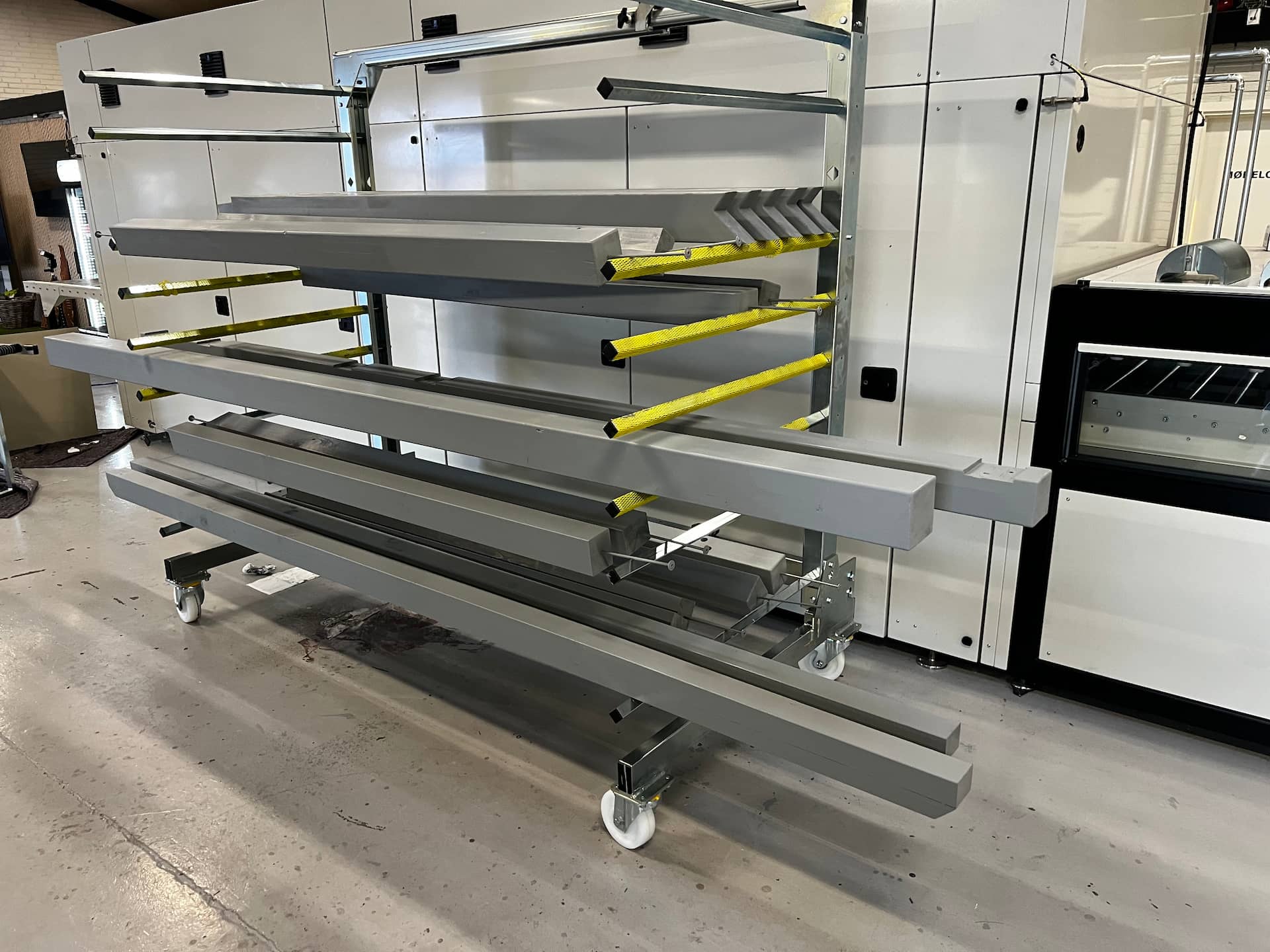
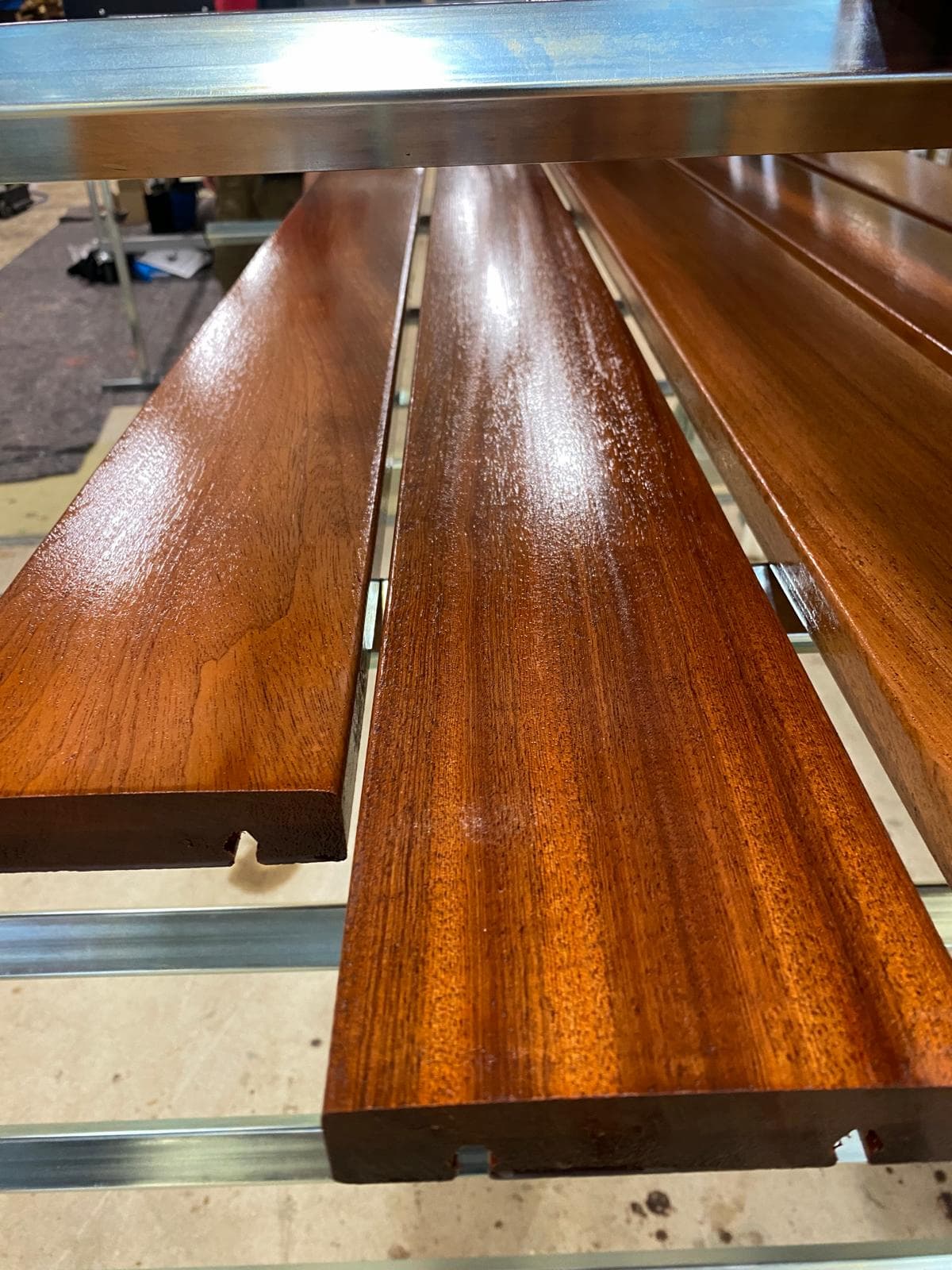
No. The A250 and A380 are coating machines, not dryers. The boards come out of the machine evenly coated but still damp and are usually placed spaced apart in a drying cart.
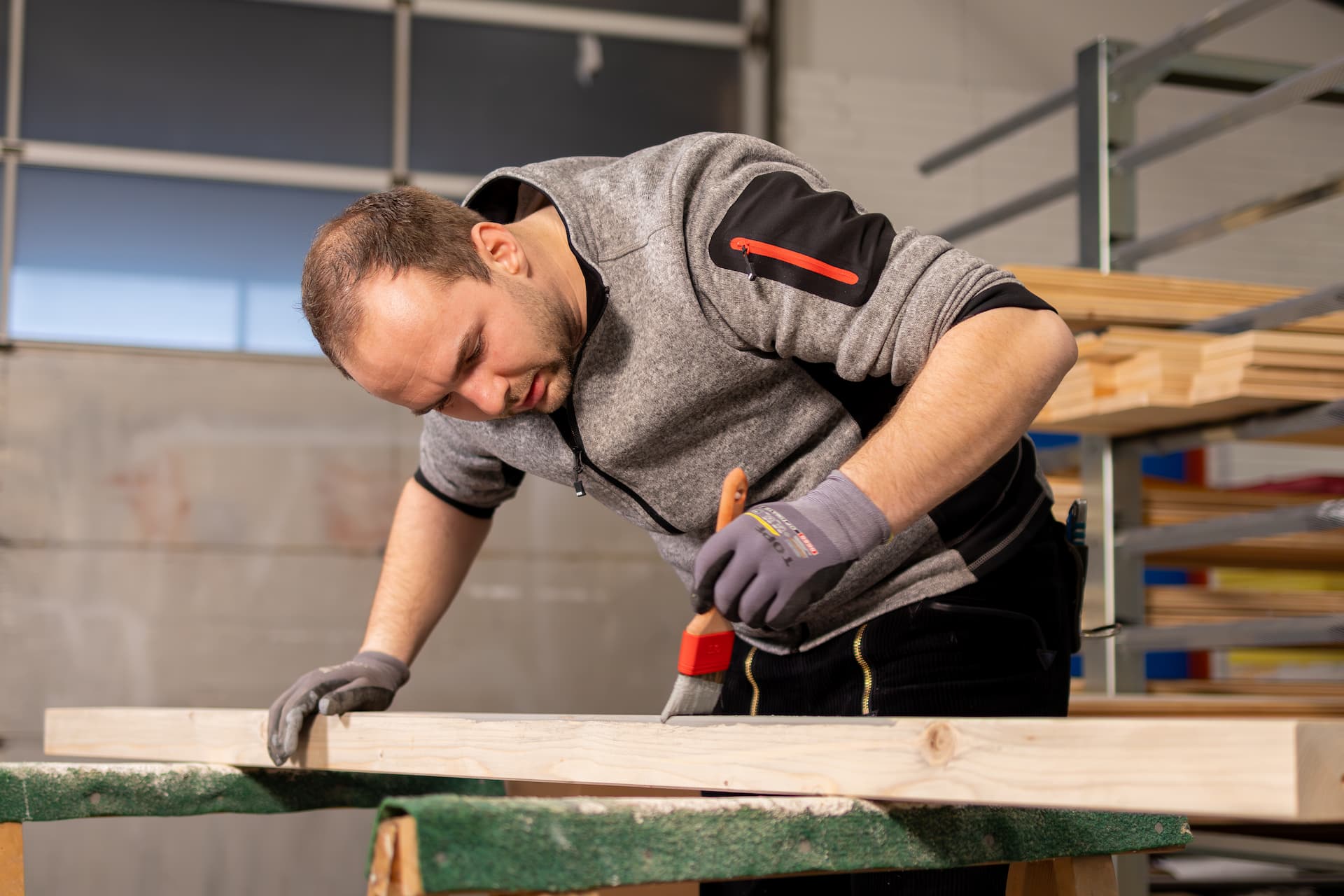
Many modern water-based wood coatings can receive the next coat after about 20 to 60 minutes at approximately 20 °C, normal humidity, and sufficient air circulation. With thin coat thicknesses, this often happens more quickly. Some wood stains have dried enough by then that the boards can be handled with clean gloves without leaving noticeable fingerprints.
Certain wood stains suitable for this purpose—and tested by us—can even be stacked while still wet. They then continue to dry within the stack over the course of about one to two days. However, this does not work with every type of paint. The coating material, color shade, wood species, wood moisture content, application amount, temperature, and stacking pressure must all be compatible.
The information in the paint manufacturer’s technical data sheet remains binding. “Touch-dry,” “paint-overable,” “stackable,” and “completely dry” are also different stages of drying.
Can I use the automatic painting machine for large projects as well?
Yes. Depending on the cross-section, profile, and work organization, it is possible in practice to coat approximately 100 to 200 m² per hour (!). With two to three well-trained employees, up to 1,400 m² of single-pass coating can be completed in a single workday under the right conditions.
For large projects, the bottleneck is usually not the automatic coating machine, but rather material logistics: loading, unloading, drying carts, in-plant transport, and sufficient drying space must be aligned with the machine’s capacity. That’s why, upon request, we plan not only the machine itself but the entire material flow.
What are the benefits of the optional grinding module?
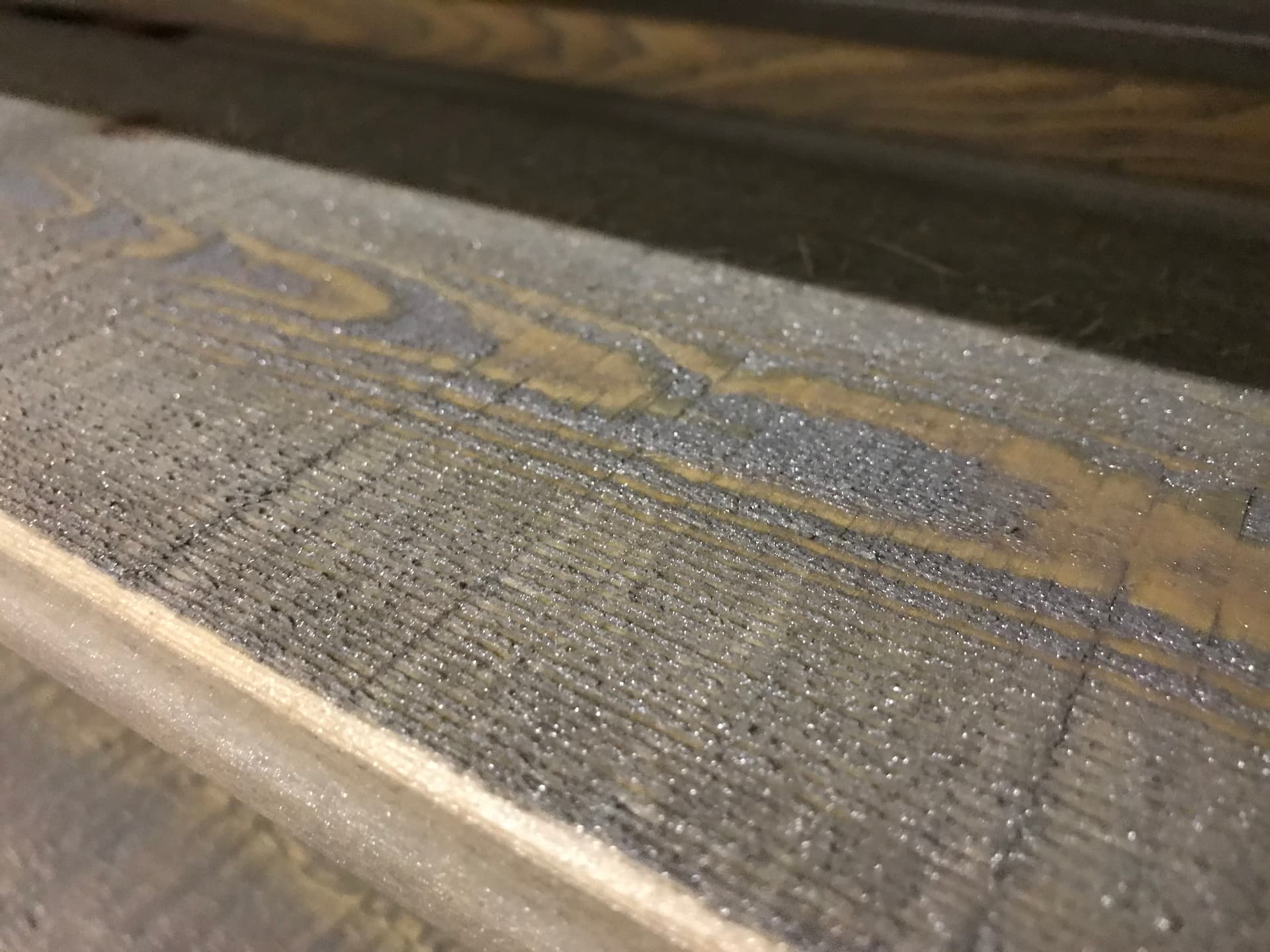
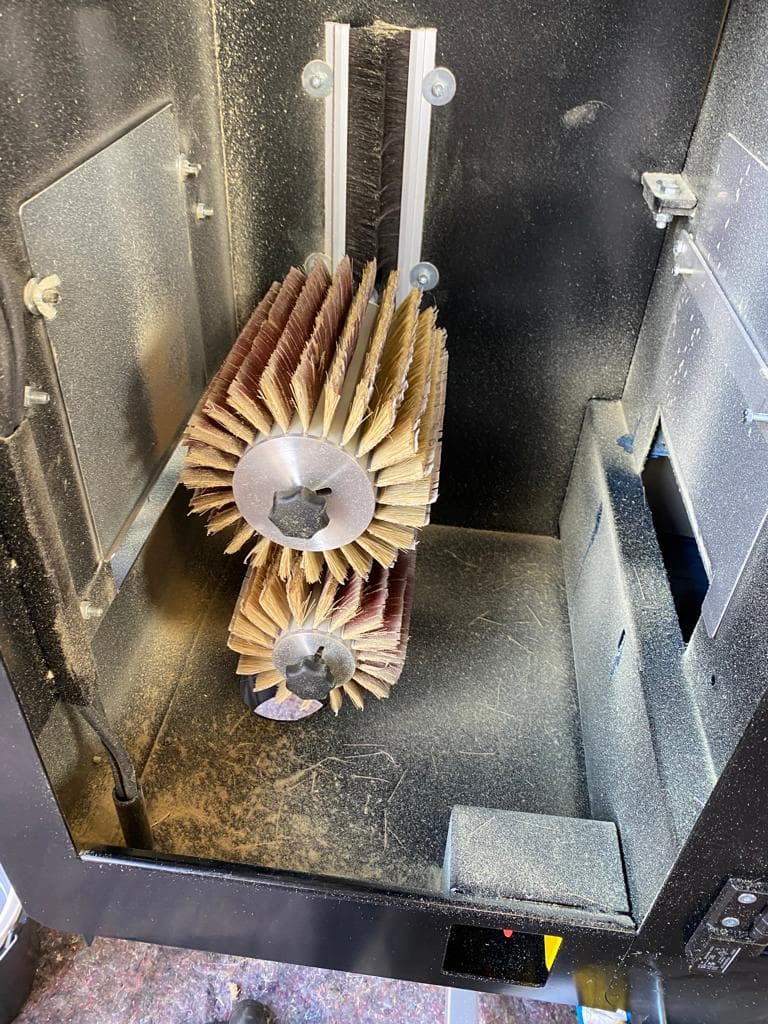
The sanding module prepares the wood surface immediately before coating. For planed wood, proper pre-sanding often improves the coating’s wetting and adhesion. For rough-sawn wood, loose fibers are removed that might otherwise flake off along with the subsequent coating.
Especially with demanding wood species and smooth planed surfaces, pre-sanding can be crucial for durability and uniformity; many manufacturers mandate it in their technical data sheets—either generally for planed lumber or, at the very least, for planed larch. Thus, a machine is not truly complete without a sanding module. We still offer it as an option to save a little money on the initial investment; even without the sanding module, the result is already better than when done by hand because the finish is applied in a uniform layer thickness. However, this does not meet the technical specifications; therefore, we always use the sanding module ourselves and recommend it to everyone. The sanding module does not, however, replace an inspection of the substrate. Wood moisture content, resin pockets, contaminants, old coatings, and the paint manufacturer’s specifications must still be taken into account.
How long do cleaning and color changes take?
Based on experience, thorough cleaning takes about 20 to 60 minutes, depending on the paint or glaze, brush configuration, and desired level of cleanliness.
If you regularly work with the same paint systems and plan your color changes wisely—for example, from light to dark—you can significantly reduce the amount of cleaning required. In the training session, we’ll show you which parts actually need to be cleaned and how to properly handle paint, rinse water, and leftover materials. So we’ll show you once how to do it cleanly and on time, and then you’ll know the ropes.
Is the A250 a good investment even for smaller companies?
Often, yes—faster than many people think, with just 2–3 standard projects per year. What matters isn’t the number of employees, but how many square meters are coated per year, how many coats of paint are required, and what costs are currently incurred through manual labor or outsourcing.
Even just a few facade, carport, or exposed roof truss projects can tie up a considerable number of work hours. In addition, doing your own coating often eliminates wait times, transportation costs, and coordination with external coating contractors.
However, giving a blanket payback period would be unreliable. That’s why we base our calculations on your actual volumes, labor costs, coats applied, setup times, and previous outsourcing costs. This way, you can determine before making a purchase the annual volume at which the investment will pay off for your business.
On top of that, you’ll generally receive more orders thanks to these improved capabilities—either because you’re now able to offer painting services for the first time, or because you can now provide high-quality work at a truly fair price, something that wasn’t possible before. Ideally, you’ll land entire woodworking projects simply because you were able to offer the coating at a competitive price.
I probably don't have enough space. Is there a solution to this?
Most of the time, yes—because the whole process is so quick, you can just do it right in the middle of the hall, which you normally wouldn’t be able to block off for the entire day or for days on end. A typical example: A facade is coated in two passes on Friday afternoon. The material dries completely over the weekend, and by Monday, the area is available again for other work.
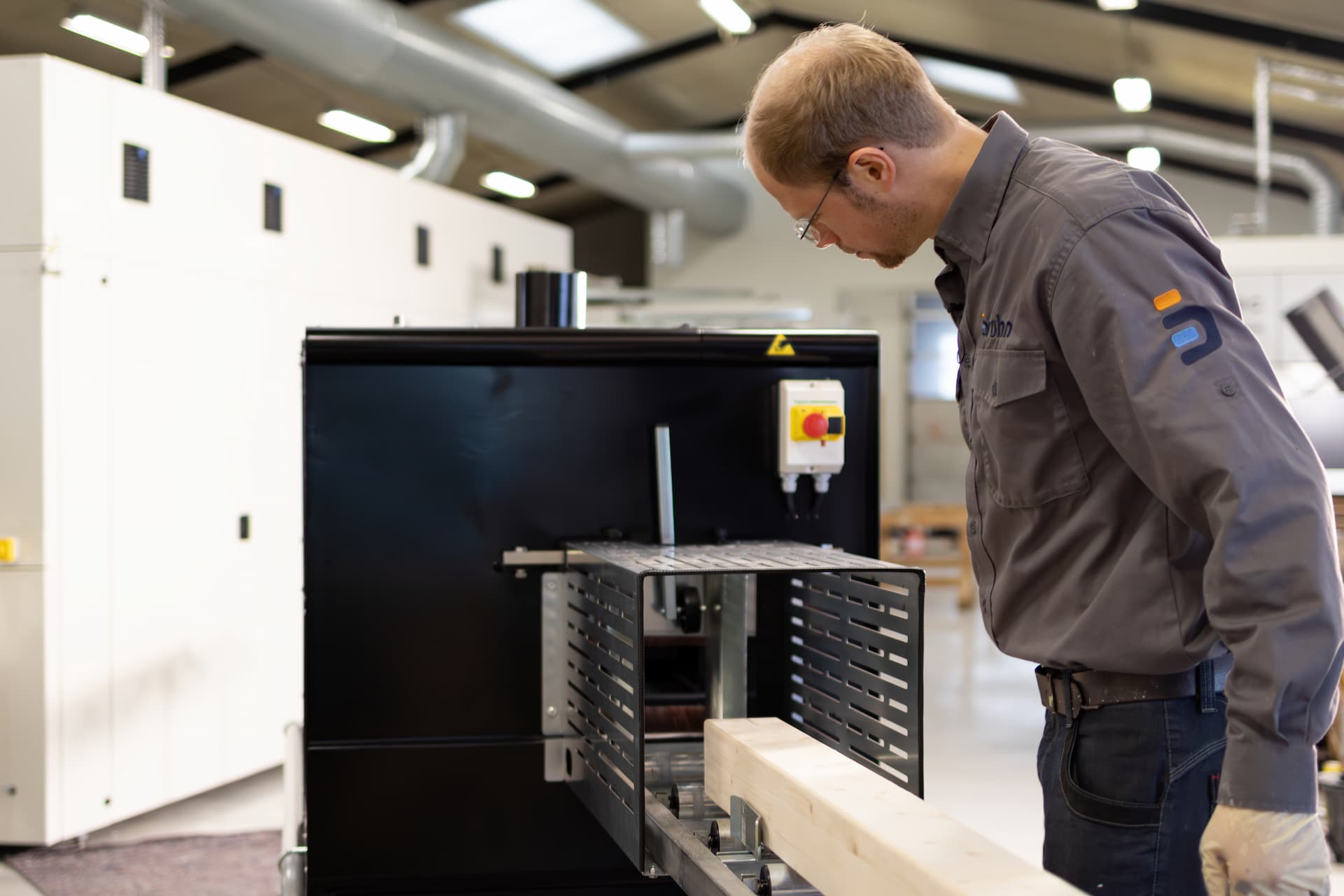
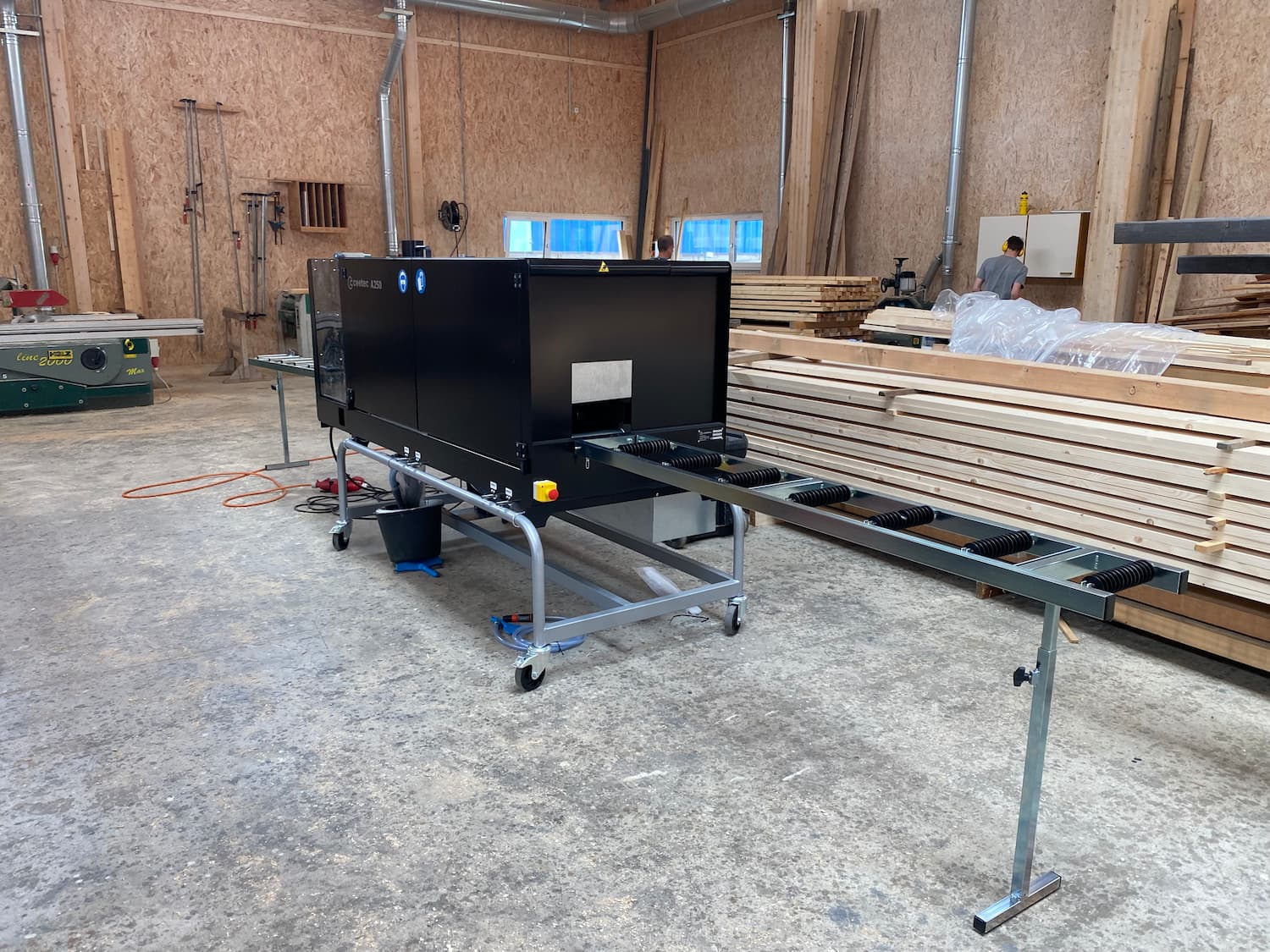
How much space do you need? The space requirement isn’t limited to the machine’s location. You also need a straight entry and exit path for the longest workpieces, space for drying carts, and safe work and traffic routes. Example: Board length 5 m, machine length with sanding module 2.70 m, safety buffer zones of 1 m each in front and behind—so a total of 2 × 5 m + 2.7 m + 2 × 1 m = 14.70 m, plus a minimum width of 3–4 m (or more, depending on the number of carts).
Using appropriate drying carts makes better use of the available hall height, rather than spreading the boards out over the entire area on trestles.
Is the automatic stringing machine easy to use, even for someone with no experience?
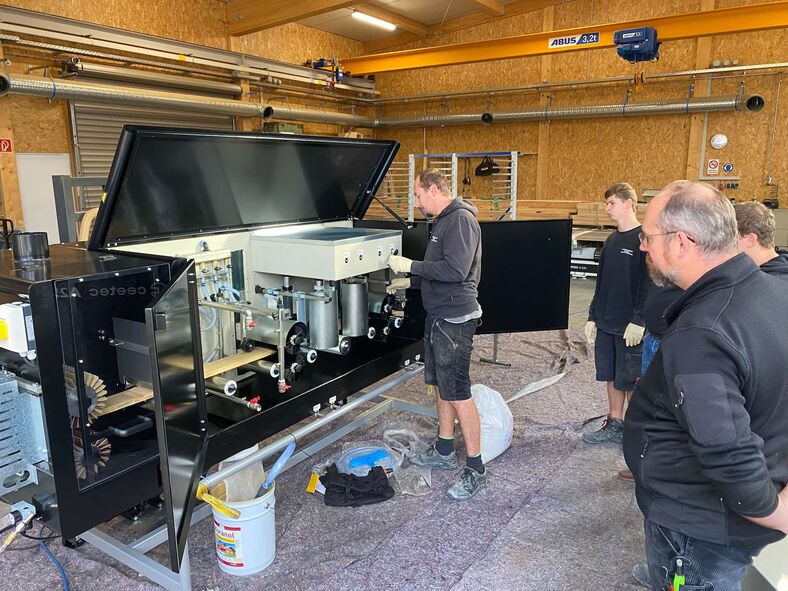
Yes. Most of our customers didn’t have an automatic painting machine or their own coating system before. After a thorough training session—which we conduct in person on-site for your employees every time—operating the machine is easy to master—right from day one!
During commissioning, we work with the customer’s own wood and paints whenever possible. We provide practical explanations of material quantity, feed rate, brush pressure, drying, cleaning, maintenance, and the procedure for changing colors.
Once the settings have been determined, they should be documented for each combination of wood, profile, and coating material. This allows you to reproduce the results without having to start from scratch every time.
How much does an A250 or A380 cost?
There is no single, standard price because the required equipment depends on the workpieces, colors, and other factors. In addition to choosing between the A250 and A380, other components such as brush assemblies, a sanding module, a drying cart, roller conveyors, and other accessories may be necessary.
That’s why we don’t offer a seemingly inexpensive “bare-bones” machine to which the necessary components are added later. Our quote is designed to show what a fully operational solution—including delivery, commissioning, training, and support—costs.
At the same time, we calculate the labor and external costs that are likely to be eliminated as a result. The purchase price alone doesn’t tell the whole story—what matters most are the costs per square meter coated and the realistic payback period.
Give us a call or send us a quick email, and we’ll provide you with a customized quote for your application. Spoiler: The machines are so affordable that they often pay for themselves within just a few months.
Here, the homeowners usually do the painting themselves. Is the machine still worth it?
Many homeowners don’t paint themselves by choice, but because the coating offered by the carpenter seems too expensive. If machine application requires up to 85% less labor time, the carpenter can offer an affordable all-inclusive package and still earn a reasonable profit margin.
At the same time, the carpenter retains control over the paint application, the amount applied, and the quality of the finish. This reduces subpar results, complaints, and projects where good carpentry work is undermined by a poorly done DIY paint job.
Homeowners are surprisingly often won over by a full-service package.
Watch this video from one of our customers, where he describes this change in detail:
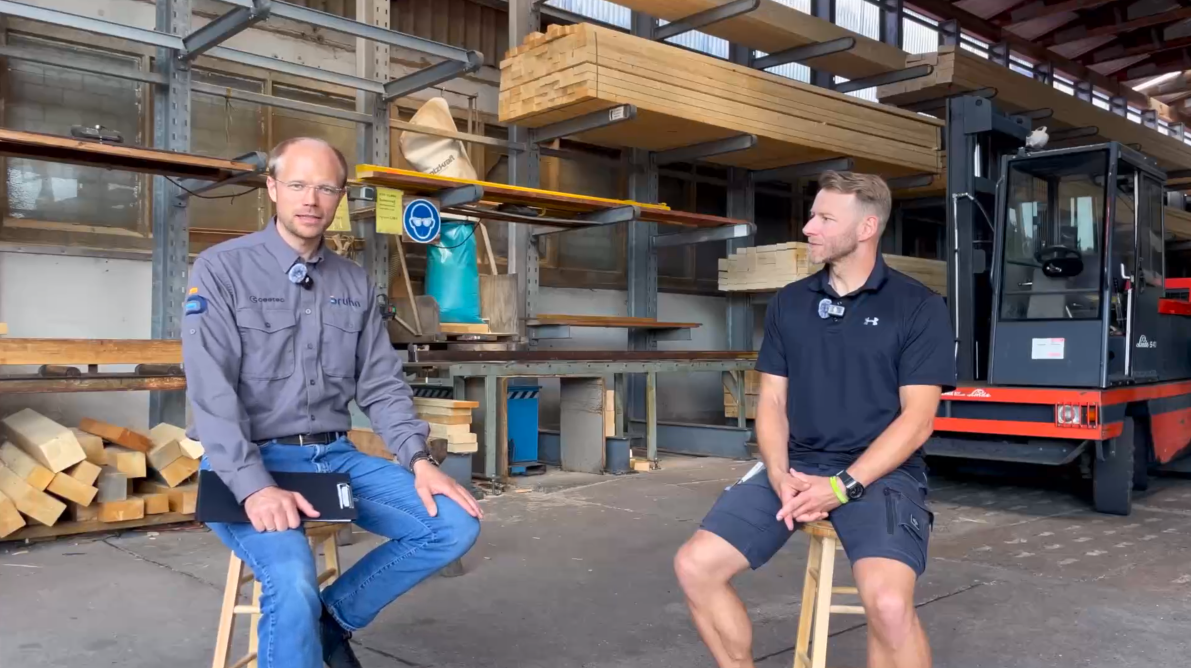
Watch the video: Experience with the A250 Automatic Coating Machine - Field Report
I already had a simple painting aid with brushes. Why would the A250 work better?
A simple brush box is not technically comparable to the A250 or A380, which is why we have frequently replaced them at the request of our customers. With simple painting aids, the amount of paint, feed rate, and result depend heavily on the operator.
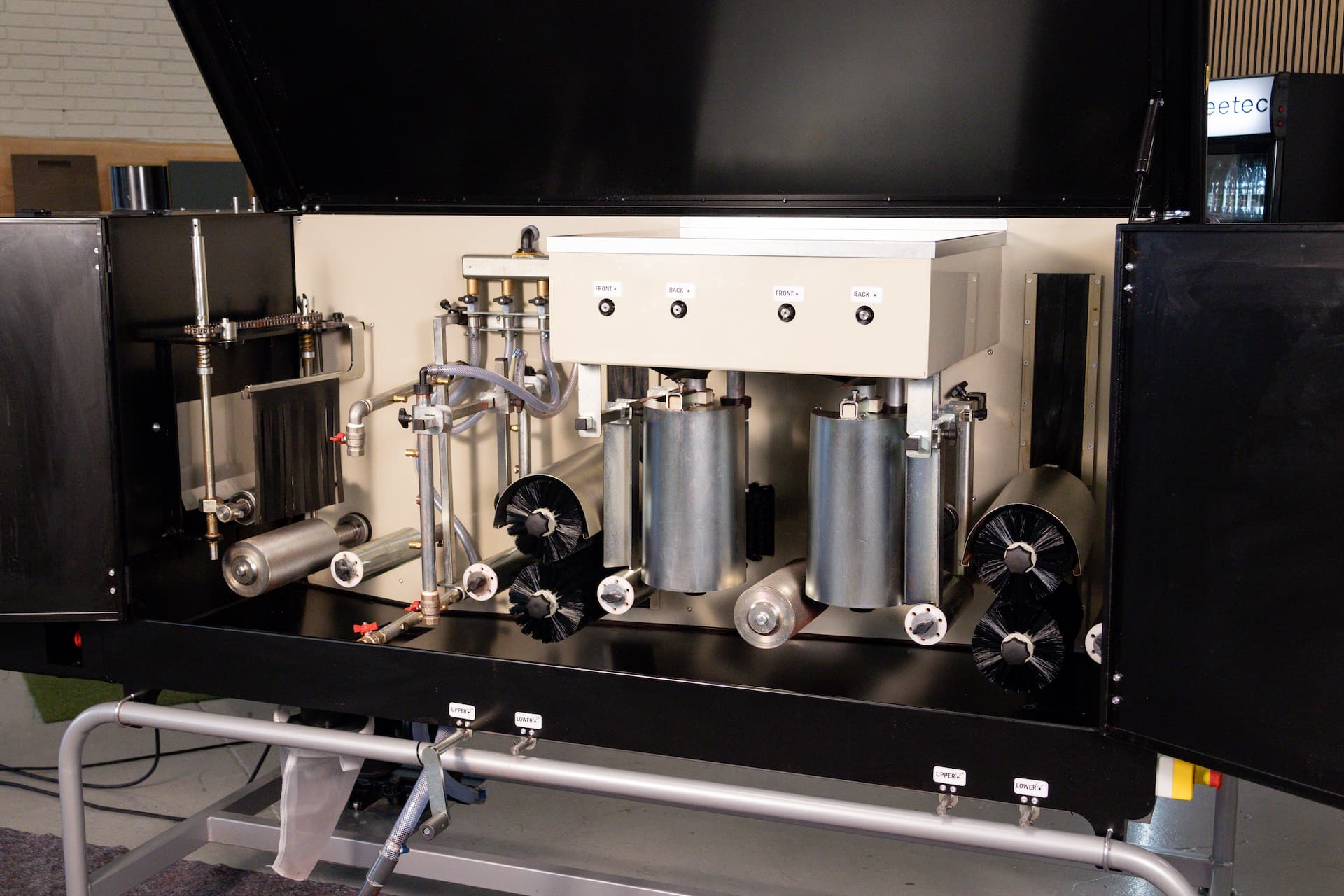
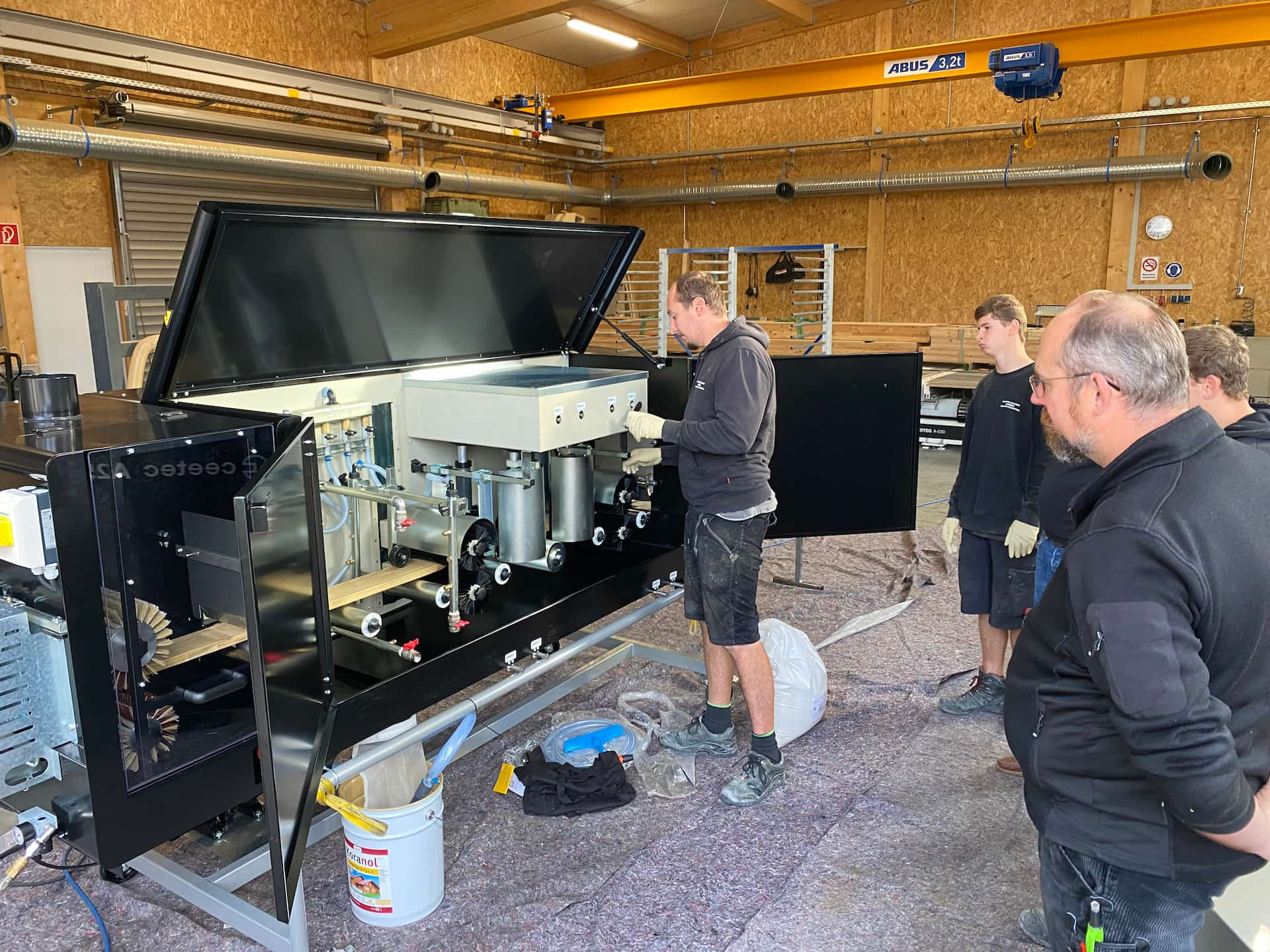
With the A250 and A380, the workpiece is automatically transported through the machine at a constant speed. The paint is applied in a controlled manner and then distributed by several adjustable, rotating brushes, worked into the surface, and scraped off to the desired application amount. Excess material is reused in the recirculation system.
This significantly improves repeatability. Nevertheless, even a good automatic machine must be properly adjusted. That’s why, whenever possible, we demonstrate the machine using your specific wood and paint before you purchase it.
Why can't the brushes be adjusted centrally from the outside?
Because the brushes have different functions and must therefore be adjusted individually. The lack of a central adjustment mechanism is not a technical drawback, but a deliberate choice made to ensure the best possible coating result.
To achieve a uniform result, the A250 and A380 operate with at least eight rotating brushes and an additional stationary glaze frame:
- The first four brushes distribute the paint on all sides and regulate the basic application volume.
- The second four brushes apply the paint more precisely and create the actual surface finish.
- Finally, the stationary glaze frame ensures a particularly uniform appearance—a decisive advantage in approximately 75% of glazing applications.
These brushes must be adjusted to different depths depending on the task. Factors such as the profile shape, wood surface, brush hardness, brush wear, paint viscosity, and desired application amount all play a role.
If, for example, the two upper brushes were moved together via a central adjustment mechanism, both would automatically have nearly the same immersion depth or brush pressure. The first brush would then no longer be able to apply the paint more vigorously, while the second brush would smooth it out more finely and create the finish.
A central adjustment mechanism would be somewhat more convenient, but it would eliminate some of the critical adjustment options. With the A250 and A380, therefore, the focus is not on the fastest adjustment but on a controllable and repeatable coating result. Once settings have been accurately determined, they can be documented for recurring types of wood, profiles, and paints and quickly restored later.
How long does it take to switch to a different wood profile?
A typical profile change usually takes only about two to three minutes. This refers solely to adjusting the machine to a different cross-section while keeping the color the same.
The brushes are adjusted to the new profile using a smooth-running hand crank connected to sturdy spindles. The brushes on the left (as viewed in the feed direction) and the lower brushes typically require only minor adjustment—or none at all—during many profile changes. In most cases, the adjustment mainly involves the upper and right-hand brushes.
For large or heavy beams, the process takes a little longer due to the more complex handling and the necessary checks. If a new color, a different wood surface, or a significantly altered application amount is added, the brush pressure, feed rate, and paint volume must also be checked.
Will my employees actually use the automatic strapping machine?
No one can guarantee that every employee will be enthusiastic about it. In practice, however, acceptance is usually high because the machine significantly reduces the amount of physically demanding, dirty, and monotonous work.
Problems would arise primarily from a poor rollout: unclear responsibilities, a lack of drying carts, unnecessarily time-consuming cleaning, or undocumented settings. That’s why we directly involve the future operators during delivery and training.
After commissioning, we remain available as your point of contact. This allows us to address questions about settings, brushes, colors, cleaning, or maintenance before incorrect operating practices take hold.
What do other customers have to say? Find out on our References page:
Is the paint filtered in the machine?
Yes. The A250 and A380 feature a two-stage filtration system. During operation, the paint is automatically recirculated and continuously filtered to remove wood chips, fibers, and other contaminants.
This keeps the coating material cleaner and significantly reduces the risk of clogged nozzles. At the same time, the filtration system ensures even paint application and protects the pump and paint system.
The filters must be checked and cleaned regularly, depending on the type of wood, the paint, and the degree of contamination. Paint that is heavily contaminated or has already dried should not be reused.
What are the annual maintenance and wear-and-tear costs?
Under normal use in a carpentry shop, annual maintenance and wear-and-tear costs remain very manageable. Even the application brushes typically last several years with proper care.
For regular maintenance, we recommend the following in particular:
- lubricate all designated bearing points,
- check the filter and paint system,
- inspect some rubber seals and replace them as needed.
These are inexpensive wear and maintenance parts. The A250 and A380 are designed to be robust, long-lasting machines. Based on our practical experience, the first major maintenance is often not necessary until approximately 600,000 m² of coated surface area has been achieved.
This figure is based on experience and is not a firm guarantee. Cleaning quality, daily operating time, the coating materials used, and how the machine is handled all influence wear and tear. Simple, regular maintenance prevents minor wear and tear from turning into major repairs later on.
What electrical and compressed air connections does the automatic painting machine require?
The A250 and A380 require a 400-V three-phase power connection with a 16-A fuse, as well as a suitable compressed air connection.
For the compressed air supply, we recommend a compressor with a power rating of at least approximately 3 kW. However, the actual air delivery rate is more important than the motor power alone: The compressor should be capable of continuously delivering approximately 250 liters of compressed air per minute.
The compressed air must be free of water, dust, and oil. This may require a water separator, appropriate filters, and a suitable compressed air treatment system. Contaminated or damp compressed air can impair the paint system and lead to malfunctions or defects in the coating result.